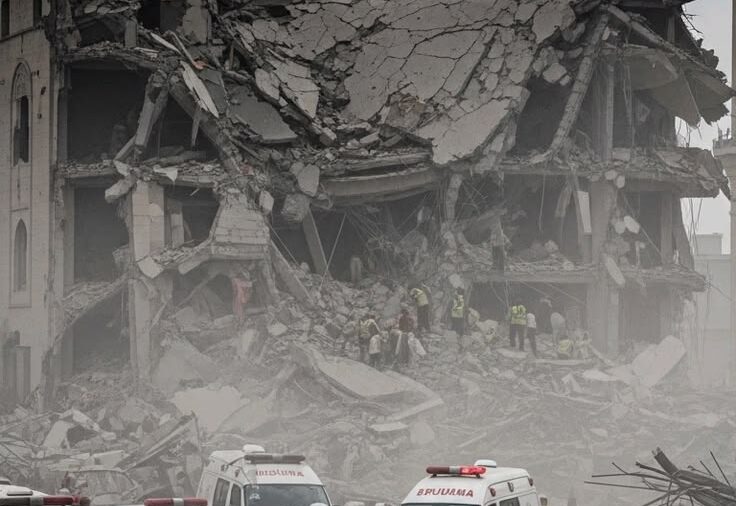
The escalating conflict in West Asia has emerged as a critical economic challenge for India, exposing vulnerabilities in energy security, trade dependencies, and diplomatic positioning while threatening the livelihoods of millions of Indian workers in the region.
Energy Security: The Immediate Economic Shock
The conflict has triggered severe energy security concerns for India, which imports nearly 90% of its crude oil needs and relies heavily on the volatile Strait of Hormuz. Approximately 2.5-2.7 million barrels daily of Indian crude imports transit this critical chokepoint, which handles 20% of the world’s oil supply
Fuel Price Vulnerability
The disruption has immediate inflationary implications. Every $10 increase in oil prices could push up inflation by 0.2-0.25 percentage points if passed to consumers. With LPG imports at 80-85% of domestic consumption, all passing through Hormuz, India faces a serious gas crisis. Unlike crude oil, India holds minimal strategic LPG reserves, covering only 2-3 weeks of demand.
LNG supplies are equally vulnerable, with 14 million tonnes of India’s 25 million tonne annual imports traversing Hormuz, affecting power generation, fertilizers, and industrial gas supplies
Market Reaction and Economic Costs
Financial markets have responded sharply to the escalating tensions. The Sensex dropped approximately 2,743 points while the Nifty fell around 533 points, wiping out ₹6.87 trillion in market value
Trade Disruptions: The Ripple Effect
India’s trade relationship with Gulf nations faces significant disruption, with bilateral trade with GCC countries reaching $178.7 billion in 2024-25 (exports: $57 billion, imports: $121.7 billion)
Shipping and Logistics Challenges
If ships need to reroute via the Cape of Good Hope, transit times to Europe and the US could increase by 15-20 days, substantially raising costs and creating delays. Recent incidents, including the shutdown of Saudi Aramco’s 550,000 barrel per day Ras Tanura refinery following drone attacks, demonstrate the vulnerability of energy logistics.
The Middle East accounts for 17% of India’s exports and serves as the primary crude oil supplier (55%), making supply chain disruptions particularly damaging
Remittances: The Human Economic Link
The economic impact extends to the social fabric through remittance flows, which reached a record $138 billion in FY25, marking a 15% rise from $119 billion in FY24
Diaspora Vulnerability
Over 10 million Indians reside and work across Gulf states, with UAE hosting 3+ million Indians (35% of UAE population), Saudi Arabia 2.7+ million, Kuwait 1+ million, and Qatar 800,000+. These remittances finance nearly half of India’s merchandise trade deficit, with Kerala alone receiving 20% of total remittances
SBI Research estimates a 5% probability that prolonged tensions causing higher oil prices may lead to remittance slowdowns. The GCC countries contribute 38% of India’s total remittance inflows, tying India’s economic health directly to Gulf oil revenues.
Economic Projections and Growth Impact
The broader economic implications are significant, with potential growth and inflation impacts:
GDP Growth Slowdown
20-25 basis points GDP growth reduction in FY27
Worst-case scenario: GDP growth could fall to around 6% if crude prices reach $130 per barrel (compared to baseline 7% projection)
Current Account Deficit Pressure:
Every $10 per barrel increase could widen India’s current account deficit by 36 basis points in FY27, given India’s 90% oil import dependency.
Inflation Transmission:
A $10 crude price increase could push inflation up by 35-40 basis points through cost pressures across sectors.
Diplomatic Challenges and Strategic Costs
The war has exposed significant gaps in India’s diplomatic response, creating economic consequences:
Delayed Strategic Engagement
India reached out to Iranian leadership 13-14 days after the war began, after the gas crisis had already hit. This delayed response is described as “reactive rather than proactive” rather than effective “firefighting
Diplomatic Positioning Costs:
The Prime Minister’s visit to Israel just three days before the war, stating “India stands with Israel at this moment and beyond,” created perceptions of alignment that contradicted India’s traditional balanced approach. This positioning has:
– Confused traditional partners like Iran.
– Damaged trust with strategic partners
– Put 10 million Indians at risk in the region
– Threatened critical remittance flows
Mitigation Strategies and Future Outlook
Supply Diversification
India has increased imports from more than 40 nations and enhanced Russian crude purchases since 2022. The United States has granted temporary 30-day permission for Indian refiners to purchase Russian oil as short-term relief
Forward Contract Protection
Previously booked forward contracts for oil deliveries may cushion immediate price impacts
Long-term Strategic Challenges
The conflict has exposed India’s vulnerability to regional conflicts affecting critical energy supply routes and demonstrated gaps in the ability to balance relationships with competing powers in West Asia. The war has also affected India’s diplomatic standing as BRICS chair, with Iran expecting India to speak more forcefully in international forums.
Bottom Line
The West Asia war represents a fundamental challenge to India’s economic trajectory, combining immediate energy security threats with medium-term growth constraints and long-term strategic repositioning requirements. While India has begun diplomatic course correction, the economic costs of delayed engagement are already being felt through market volatility, inflation pressures, and threatened remittance flows. The conflict underscores the urgent need for enhanced energy security strategies, diplomatic flexibility, and economic resilience in India’s engagement with West Asia.
Nice article